Managers: 5 Step Rollout for Multi Location Inventory, No Spreadsheets
Christian MontenegroSeptember 7, 202611 min read
Multi-location inventory management is the practice of tracking stock separately at each site while keeping one accurate picture of what you own across all of them. Once you have that, you'll usually need dedicated software and written SOPs to keep it accurate as you grow.
TL;DR:
- Managing multiple locations requires real-time, location-specific data to prevent stockouts and imbalances, especially with serialized SKUs that can only exist in one place at a time.
- Without a centralized ledger and proper workflow, common issues include sync delays, inaccurate transfer records, and unseen in-transit stock that lead to double-ordering and lost sales.
- A staged rollout starting with visibility improvements and small pilots helps avoid costly mistakes, particularly on slow-moving SKUs before scaling to all sites.
- Prioritizing SOPs, task verification, and frequent reconciliation ensures staff follow processes and keeps inventory data accurate for automated reorder rules.
- Key metrics like days of supply, transfer accuracy, and reconciliation freshness illuminate where failures occur, enabling targeted improvements at each location.
Table of Contents
- What Changes When Inventory Management Covers Multiple Locations?
- When Do You Actually Need Multi-Location Inventory Management?
- What Goes Wrong Without a Real System in Place
- The Building Blocks of a Working Multi-Location System
- Best Practices That Actually Hold Up at Scale
- What Metrics Actually Tell You Something Is Wrong
- Your Rollout Checklist From Pilot to Full Scale
- How Bossy Fits Into Day-to-Day Inventory Work
- What I'd Prioritize First if I Were Starting This Today
- Ready to Enforce the SOPs Behind Your Inventory Counts?
- Where to Go Deeper on Setup and Serialization
- Sources
- FAQ
What Changes When Inventory Management Covers Multiple Locations?
Running one stockroom means one number to trust. Running five means five numbers that all have to add up, and the vocabulary matters more than you'd think. On-hand is what's physically sitting on a shelf. Available is on-hand minus anything already promised to a customer. Committed or allocated stock has been assigned to an order but hasn't shipped. In-transit stock has left one location but hasn't landed at another. Add on-hand and in-transit together and you get your inventory position, the number you should actually use to decide when to reorder.
Here's what trips people up: your company-wide total can look healthy while three of your five stores are sitting at zero. A unified inventory view that reports these figures per location, not just in aggregate, is what prevents that blind spot.
- On-hand: physically present right now
- Available: on-hand minus committed
- In-transit: shipped but not yet received
- Inventory position: on-hand plus in-transit, your true reorder trigger
Serialized and lot-tracked SKUs add another wrinkle. A serial number can only exist at one location at a time, and most systems will throw an error if you try to sell it from the wrong site.
When Do You Actually Need Multi-Location Inventory Management?
You've probably crossed the threshold if you're juggling more than two or three sites, several hundred SKUs, or a mix of retail storefronts, warehouses, and third-party logistics partners. Regional demand differences and inconsistent supplier lead times push the case even harder.
- Site count: several locations with independent stock rules
- SKU complexity: a large number of SKUs or serialized/lot-tracked items
- Channel mix: online, in-store, and wholesale pulling from the same pool
- Fulfillment teams see the fastest payoff: fewer stockouts, quicker order routing, and less time spent calling other locations to ask "do you have this?"
What Goes Wrong Without a Real System in Place
Most of the pain in multi-location inventory management comes from a handful of repeat offenders. Knowing them ahead of time lets you build defenses before they cost you a sale.
- Sync delays. If your point-of-sale and warehouse systems update once a day instead of continuously, you're selling against stale numbers for hours at a time.
- Stock imbalances. One store sits on excess inventory while another stocks out of the same SKU, usually because nobody has a transfer process that actually gets used.
- In-transit blind spots. Stock that's left the warehouse but hasn't arrived yet is invisible in a lot of basic systems, which leads straight to double-ordering or missed sales.
- Serialized inventory mistakes. Trying to sell or transfer a serial-tracked item from the wrong location triggers system errors and stalls fulfillment.
- Rising carrying and transfer costs. Every imbalance you don't catch early turns into either dead stock sitting in the wrong place or a rush transfer you're paying extra to expedite.
The Building Blocks of a Working Multi-Location System
A functioning setup rests on a handful of components working together, not one clever spreadsheet.
You need a centralized ledger that holds per-location records and syncs in close to real time, not once overnight. On top of that sits order routing logic that decides which location fulfills a given order, since Shopify's own documentation notes that a product has to be active at a specific location before it can even be sold from there. Layer in a transfer workflow with a clear ship, receive, and confirm sequence, backed by an audit trail so you can see who moved what and when.
- Centralized ledger with real-time per-location sync
- Order routing rules tied to location activation and fulfillment priority
- Ship, receive, confirm transfer workflow with an audit trail
- Location-specific handling for serialized and lot-tracked SKUs
- Inventory position (on-hand plus in-transit) as the basis for every reorder calculation
Best Practices That Actually Hold Up at Scale
Start with visibility before you touch automation. You can't automate a process you can't see clearly, and jumping straight to fancy reorder rules on top of messy data just automates the mess.
Once visibility is solid, standardize your SOPs for receiving, transfers, and cycle counts so every location follows the same steps regardless of who's on shift. Set reorder points and safety stock per location based on that site's own sell-through rate. A flagship store and a slow satellite location should never share the same trigger number.
- Standardize receiving, transfer, and cycle count procedures across every site
- Set per-location reorder points and safety stock tied to actual sell-through
- Match sync frequency to your growth rate, more on that below
- Require scan-based receiving and transfer verification instead of manual entry
- Turn on location-aware alerts and automated transfer suggestions to rebalance stock before it becomes a problem
Sync frequency deserves its own call-out. High-growth operations running multiple locations often need frequent full-catalog reconciliation to stay accurate, while lower-velocity setups can usually get by with less frequent syncs. And reviewer feedback on inventory platforms consistently points to shorter reconciliation cycles as the fix for the transfer-related exceptions that eat up managers' time.
Pro Tip: Scan-based verification catches the small errors that spreadsheets never will, a mis-keyed quantity during receiving is often the root cause of a stockout three weeks later.
What Metrics Actually Tell You Something Is Wrong
Tracking the right numbers matters more than tracking a lot of numbers. Five metrics cover most of what you need.
- Days of supply per location, calculated from inventory position, flags sites heading toward a stockout before it happens.
- Fill rate and backorder frequency show whether customers are actually getting what they ordered, and how often.
- Transfer lead time and transfer accuracy (what shipped versus what was received) expose weak links in your transfer process.
- Cycle count variance and shrinkage per site tell you which locations have a discipline problem versus a systems problem.
- Reconciliation freshness, essentially how stale your sync is at any given moment, is the metric most teams ignore until it costs them a sale.
A store running consistently high days of supply on slow movers while another site stocks out weekly on the same SKU is usually a sign your reorder points were set once, company-wide, and never revisited.
Your Rollout Checklist From Pilot to Full Scale
Rolling this out in stages beats trying to flip every location over on the same day.
- Discovery. Map every location, every system currently in use, your full SKU list, and whatever stock rules already exist, even informal ones.
- Design. Define order routing logic, decide which SKUs get activated at which locations, and write out your transfer rules.
- Pilot. Pick a small SKU set and a single origin/destination pair. Run the complete ship, receive, confirm cycle and fix what breaks before it touches every site.
- Scale. Expand to more locations and SKUs, turn on automated transfer suggestions, and tune reorder points location by location.
- Operate. Lock in a reconciliation cadence, schedule recurring cycle counts, and keep your KPI dashboard in front of the right people every week.
Pro Tip: Run your pilot on your slowest-moving SKUs first, not your bestsellers. Mistakes in a pilot with a $40 item cost a lot less than mistakes with your top seller.
How Bossy Fits Into Day-to-Day Inventory Work
Software gets the numbers right. Getting people to actually follow the process is a different problem, and that's where most rollouts quietly fail. Bossy's task and inventory features let managers assign counts, transfers, and receiving steps as verified tasks, photo proof included, instead of hoping someone remembers the SOP.
- Cycle counts become recurring checklist tasks with a manager approval step, not a once-a-quarter scramble
- Transfer confirmations get documented with photo proof, closing the gap between "shipped" and "received"
- Cascading goals connect a shift-level count to the location's broader accuracy targets
- Restaurants, salons, and multi-shop retailers use the same verification model for everything from stockroom counts to walk-in inventory checks
What I'd Prioritize First if I Were Starting This Today
Visibility beats automation, every time, in the early going. Get a clean, real-time picture of what's actually at each location before you layer on automated reorder rules. Automating bad data just moves the error faster.
Write SOPs that tell staff exactly what to do when the system flags an exception, a mismatched count, a stalled transfer, because a smart alert with no clear next action just becomes an ignored notification. And resist the urge to set one reorder point company-wide. A location with fast turnover and one with slow, seasonal demand need different numbers, and treating them the same guarantees you'll be wrong at one of them.
— Christian
Ready to Enforce the SOPs Behind Your Inventory Counts?
Bossy gives you the missing layer between a good inventory policy and one that actually gets followed on the floor. Task verification, photo proof, and manager approval turn your receiving, transfer, and cycle count SOPs from a document nobody reads into steps your team completes and confirms every shift.
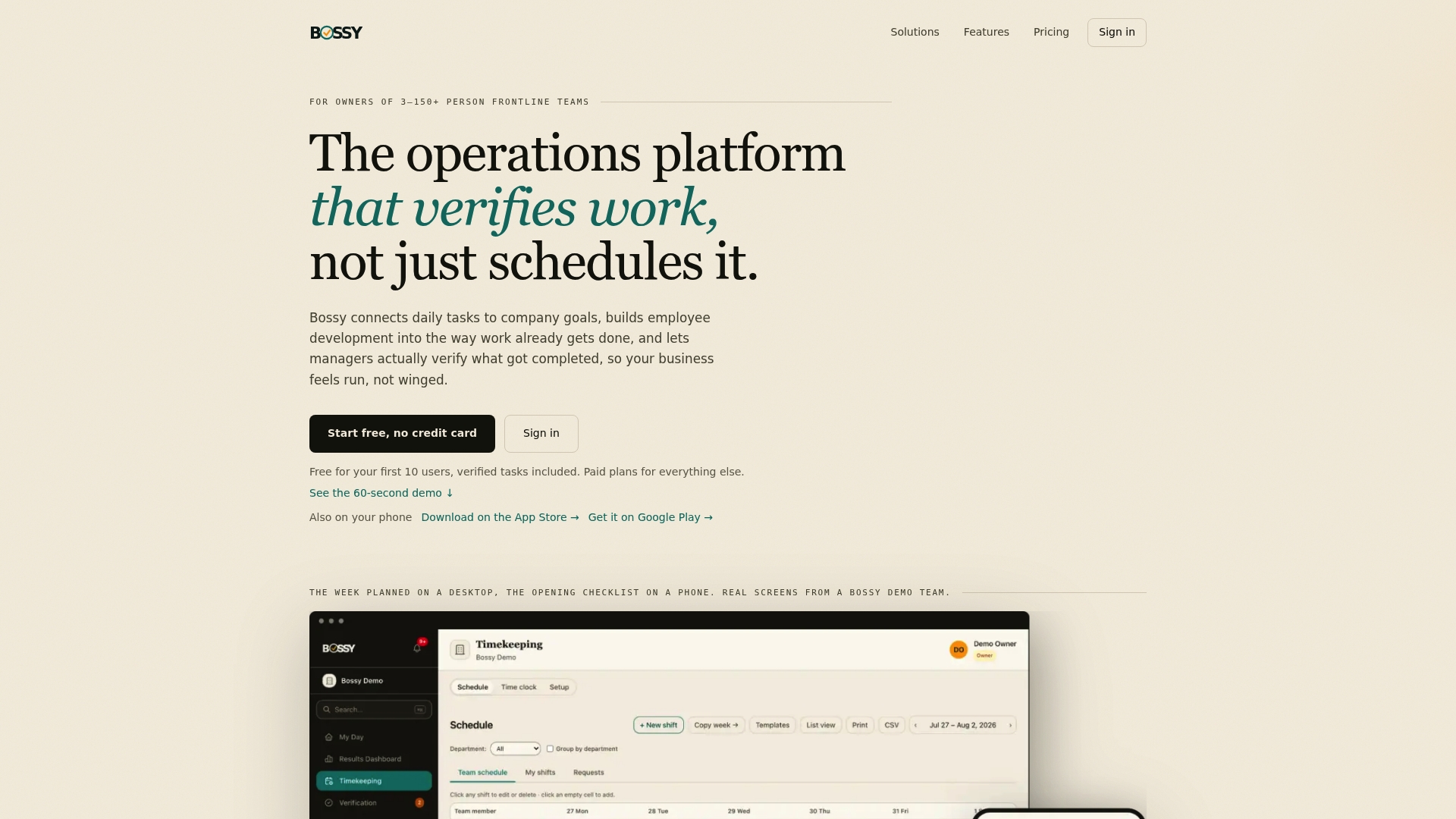
Retail chains, restaurants, and service teams use Bossy's retail-specific tools to catch the exact errors that cause stock imbalances between locations. If cycle counts and transfer confirmations are the part of your checklist that keeps slipping, start a trial at Bossy and see how task verification holds your locations accountable without adding another spreadsheet to manage.
Where to Go Deeper on Setup and Serialization
For platform-specific setup, NetSuite's documentation on multi-location inventory covers serialization rules in detail, including how location-specific transactions prevent errors. Shopify's help center walks through per-location activation and order routing for teams on that platform. Teams managing specialized transfer workflows, including in-transit handling for fleet operations, can find additional context in DEF Storage Mistakes to Avoid.
Sources
- NetSuite Applications Suite - Multi-Location Inventory
- Warehouse & Multi-Location Inventory | ReplenishRadar
- Streamlining multi-location inventory management (Netstock blog)
FAQ
Does Amazon Use Vendor-Managed Inventory (VMI)?
Amazon operates VMI-style programs with some suppliers, where the vendor manages replenishment based on Amazon's sales and inventory data, though the specifics vary by program and category.
What Is the Best Inventory App for Managing Multiple Locations?
There's no single best answer since it depends on your SKU count, channel mix, and whether you need serialization support, but the right choice always includes per-location tracking, real-time sync, and transfer workflows with audit trails. For frontline teams that also need task verification on top of inventory counts, a platform like Bossy covers both.
What Is EOQ and JIT in Inventory Management?
EOQ (Economic Order Quantity) is a formula for finding the order size that minimizes total ordering and carrying costs. JIT (Just-in-Time) is a strategy that keeps inventory levels low by ordering stock only as it's needed for production or sale.
How Often Should I Reconcile Inventory Across Locations?
High-growth operations with five or more locations often need hourly full-catalog reconciliation, while lower-volume setups can typically manage with a daily sync without risking stockouts.