7 Daily Food Safety Checklist Items to Make Kitchens Inspection Ready
Christian MontenegroSeptember 22, 202616 min read

A food safety checklist worth using covers seven areas every shift: personal hygiene, time and temperature, receiving, storage, cleaning and sanitizing, equipment, and facility conditions. But checking boxes isn't the point. Every "no" needs a timestamped fix and a manager's signature, because that's what turns a checklist from paperwork into proof you're actually running a safe kitchen.
TL;DR:
- Daily handwashing and glove-changing protocols must be consistently followed and documented with time stamps and manager signatures to prevent foodborne illnesses from recurring violations.
- Temperature control logs require precise recording of cooking, holding, cooling, and reheating, with corrective actions detailed and signed before shift end; missed time windows lead to discarding food.
- Receiving checks must verify delivery temps, package integrity, supplier approval, and proper date marking to ensure traceability and prevent contaminated or spoiled ingredients from entering the kitchen.
- Storage areas need strict adherence to FIFO, proper layering of raw and ready-to-eat foods, and accurate date marking to prevent cross-contamination and extend shelf life.
- Digital checklists with photo proof and automatic task reminders improve compliance and allow real-time problem resolution, reducing the risk of repeated violations unnoticed on paper.
Table of Contents
- Personal Hygiene and Handwashing Checks
- Time and Temperature Controls: Cooking, Holding, Reheating, and Cooling
- Receiving and Approved-Source Checks
- Storage, Date Marking, and FIFO Order
- Cleaning, Sanitizing, and Chemical Handling
- Utensils, Equipment, Thermometers, and Maintenance Checks
- Facility, Pest Control, and Physical-Safety Checks
- Documentation, Corrective Actions, and Inspection Readiness
- From Paper Checklist to Active Managerial Control
- Cross-Contamination Prevention Strategies
- Employee Training and Food Safety Awareness
- Allergen Management and Labeling Requirements
- Emergency Procedures and Food Recall Protocols
- Perspective: Daily Discipline Beats Occasional Deep Cleans
- Make Your Checklist Actually Get Followed
- Sources
- FAQ
Personal Hygiene and Handwashing Checks
Handwashing failures cause more foodborne illness outbreaks than almost anything else in your kitchen, which is why this is the first stop on any real inspection. Your checklist needs to confirm both behavior and infrastructure, not just one or the other.
Check for clean uniforms, hair restraints on every line cook, and jewelry limited to a plain band. Wounds need waterproof coverings under a glove, and nobody touches ready-to-eat food with a bare hand. Hand sinks need to stay stocked with soap and disposable towels, with signage reminding staff of the 20-second scrub standard.
- Uniforms clean, hair restrained, minimal jewelry
- No bare-hand contact with ready-to-eat food (gloves, tongs, or deli paper)
- Wounds covered with a waterproof bandage plus a glove
- Hand sinks stocked with soap, towels, and posted signage
- Handwashing observed at shift start, after breaks, and after handling raw protein
Corrective actions should name the person, the issue, the fix, and the time. "3:15 PM, line cook observed skipping glove change after raw chicken. Retrained on protocol, gloves changed, manager initials JD." That's the kind of entry an inspector accepts. A checkmark with nothing next to it is not.
Time and Temperature Controls: Cooking, Holding, Reheating, and Cooling
This is where most violations happen, and it's also where your logs carry the most legal weight. The FDA's food code guidance sets clear minimums, and your checklist should mirror them exactly.

Statistic Callout: Cooling food from 135°F to 70°F must happen within 2 hours, and from 70°F down to 41°F within another 4 hours, according to FDA temperature and time standards. Miss either window and the batch gets discarded, not reheated and served.
Run through these checkpoints every shift:
- Poultry cooked to 165°F, checked with an instant read thermometer.
- Ground meat cooked to 155°F, held for 17 seconds.
- Seafood and steaks cooked to 145°F, held for 15 seconds.
- Plant-based items on a hot-hold line kept at 135°F or above.
- Hot-holding units verified at 135°F or higher every two hours.
- Cold-holding units verified at 41°F or below every two hours.
- Calibrate every thermometer daily using the ice-point method before service starts.
Log every reading, not just the failures. When something fails, the corrective action needs specifics: discard the batch, reheat to temperature and retest, or pull the unit from service and call maintenance. Whatever the fix, write down who did it and when, then have a manager sign off before the shift ends.
Receiving and Approved-Source Checks
Food safety starts before anything hits your kitchen. What you accept at the back door determines everything downstream, so your receiving checklist has to catch problems before they enter storage.
- Record delivery temperature and arrival time on a receiving log for every truck.
- Inspect packaging for tears, leaks, or signs of tampering before signing off.
- Document rejection reasons in writing when a delivery gets refused, including the temperature reading that triggered it.
- Confirm the delivery matches your approved supplier list, not a substitute vendor nobody vetted.
- Check dates on perishables against your own shelf-life standards, not just the printed expiration.
Traceability matters more than most managers realize until there's a recall. If you can't tell an inspector which supplier delivered which lot on which day, you're guessing during the exact moment you need facts. Keep supplier invoices tied to your receiving log, even if that just means a shared folder by date.
Storage, Date Marking, and FIFO Order
Storage mistakes are quiet. Nobody notices a cooler stacked wrong until the raw chicken juice drips onto the lettuce below it. Your checklist should force a visual check, not just a temperature reading.
- Ready-to-eat items stored above raw proteins, never below.
- Stacking order top to bottom: ready-to-eat, whole cuts of beef and pork, ground meats and seafood, then poultry on the bottom shelf.
- All stored food kept at least 6 inches off the floor, per common county checklist standards.
- Cooler and freezer thermometers placed at the warmest point, checked at least twice per shift.
- Every prepped item date marked, with a 7-day discard rule (or shorter, per your local code) for ready-to-eat items held cold.
- First in, first out enforced on every shelf, not just the walk-in.
Date marking sounds tedious until you realize it's the single easiest violation to eliminate. A roll of masking tape and a marker costs less than one bad health inspection score.
Cleaning, Sanitizing, and Chemical Handling
A dirty kitchen and an unsanitized one aren't the same problem, and your checklist needs to catch both. Cleaning removes visible debris. Sanitizing kills what you can't see, and it only works at the right concentration.
- Master cleaning schedule posted, with initials confirming who completed each task.
- Sanitizer test strips used at least once per shift on every sanitizer bucket and the final sink compartment.
- Wiping cloths stored in sanitizer solution, replaced when the solution weakens, since concentration degrades over time.
- Three-compartment sink set up correctly: wash, rinse, sanitize, in that order.
- Chemicals labeled and stored away from food and food-contact surfaces.
Pro Tip: Keep a laminated sanitizer concentration chart taped right above the sink. Staff guess less when the number they're aiming for is staring back at them.
Utensils, Equipment, Thermometers, and Maintenance Checks
Your equipment is only as trustworthy as your last calibration. A thermometer that reads three degrees off doesn't just fail an inspection, it lets unsafe food slip through undetected all day.
- Calibrate every thermometer daily using the ice-point method (32°F in ice water); pull any unit that can't hit that mark.
- Store knives and utensils clean, dry, and separated from raw-food equipment.
- Pre-heat hot-holding units before service starts, not after the first order comes in.
- Log equipment maintenance issues immediately, including who reported them and when they were resolved.
- Keep sanitizer test kits stocked and store results with your daily temperature logs, not in a separate binder nobody checks.
Facility, Pest Control, and Physical-Safety Checks
Food safety and physical safety overlap more than most checklists admit. A cluttered aisle or a pest sighting can sink an otherwise clean inspection.
- Aisles clear, wet-floor signs posted immediately after mopping.
- Pest control contract current, with treatment dates logged and any staff-reported sightings recorded the same day.
- Delivery boxes inspected for pests before they enter storage.
- Grease hoods clean, fire extinguishers visible and accessible, and electrical panels unobstructed.
Documentation, Corrective Actions, and Inspection Readiness
A completed checklist without context is close to worthless in front of an inspector. What actually holds up is a record showing you caught a problem and fixed it, on the spot, with a name attached.
- Record the time a failure was found, the specific corrective action taken, and the manager's signature confirming it.
- Keep templates for temperature logs, cooling logs, receiving logs, cleaning schedules, and training records, all dated and filed the same way each time.
- Retain logs for at least the period your local health department requires, often 90 days to a year depending on jurisdiction.
- Compare a weak entry ("cooler temp: fail") against a strong one ("cooler temp 46°F at 2 PM, food moved to backup unit, original unit tagged out, manager JD, 2:10 PM") to see the difference an inspector actually cares about.
A checklist should function as a diagnostic tool, not a filing exercise. If your freezer keeps failing every Tuesday, that pattern matters more than any single day's entry.
From Paper Checklist to Active Managerial Control
Paper checklists fail quietly. A box gets checked, nobody reviews it, and the same problem repeats for weeks before anyone notices the pattern. Active managerial control means someone is actually watching the data, not just collecting it.
Digital checklists close that gap in a few concrete ways:
- Recurring tasks fire automatically each shift, so nothing gets skipped because a manager forgot to print the sheet.
- Photo proof attached to a temperature reading or a cleaning task makes a "yes" checkbox harder to fake.
- Approval queues force a manager to review flagged items before the shift closes, not three days later during an audit scramble.
Pro Tip: If a checklist item fails and nobody reviews it until the next inspection, it wasn't a control system. It was a record of a problem you already had.
Cross-Contamination Prevention Strategies
Cross-contamination rarely comes from one dramatic mistake. It comes from small, repeated habits: the same cutting board for chicken and vegetables, a wiping cloth that moved from a raw-meat station to a prep table, a glove that touched a doorknob and then a sandwich.
Your checklist should force staff to think in zones. Raw poultry, raw seafood, raw beef, and ready-to-eat produce each need their own cutting boards, ideally color coded so nobody has to remember which board is which under pressure. Utensils follow the same rule. A tong used on raw chicken doesn't touch cooked chicken until it's been washed, rinsed, and sanitized.

Storage order matters just as much as prep-line habits. Stacking ready-to-eat items above raw proteins in a cooler isn't a suggestion, it's the single easiest way to stop drip contamination before it starts. Sanitizer test strips confirm your sanitizing station is actually killing pathogens between uses, not just spreading them around at a weaker concentration.
Hand contact is the other major vector. Staff moving between raw prep and ready-to-eat assembly without a glove change or a full handwash carry more risk than a dirty cutting board ever will. Build a rule into your checklist: any transition between raw and ready-to-eat work requires a glove change, no exceptions, no matter how busy the rush gets.
Allergen cross-contact deserves its own mention here too, since a shared fryer or an unwashed prep surface can trigger a reaction even when the recipe itself is allergen-free. Treat allergen separation with the same seriousness as raw-protein separation, because for the guest affected, the outcome is just as serious.
Employee Training and Food Safety Awareness
A checklist only works if the people filling it out understand why each item matters. Training is not a one-time onboarding video. It's an ongoing habit that needs its own place on your operational calendar.
New hires need hands-on training before their first solo shift: proper handwashing technique, glove use, temperature logging, and what a corrective action actually looks like in practice. Watching someone do it once rarely sticks. Have them demonstrate it back to a trainer before they're on their own.
Ongoing training matters more than most managers budget for. A quarterly refresher on temperature danger zones, allergen protocols, or cleaning schedules catches the bad habits that creep in over months of routine. Self-assessment checklists built around training records help confirm every employee has actually been certified, not just told they should be.
Keep a training log with dates, topics covered, and signatures for every session. When an inspector asks how you know your staff understands food safety basics, "we trained them in March" isn't an answer. A dated, signed record is.
Make food safety part of daily conversation, not an annual lecture. A thirty-second reminder at a pre-shift meeting, tied to something specific ("check your cooler temps before you start prep today") does more for compliance than a laminated poster nobody reads twice.
Allergen Management and Labeling Requirements
Allergen mistakes are among the fastest ways to turn a good night into a medical emergency, and they're almost entirely preventable with the right checklist habits. The nine major allergens tracked in the U.S., milk, eggs, fish, shellfish, tree nuts, peanuts, wheat, soybeans, and sesame, all need explicit handling protocols, not general "be careful" guidance.
Menu labeling has to be accurate and current. Every recipe change, from a new sauce to a substituted ingredient, needs a review against your allergen list before it goes back on the menu. A checklist item confirming "recipe changes reviewed for allergens" catches the kind of quiet substitution that causes most allergen incidents.
Kitchen practice matters as much as the printed menu. Dedicated equipment for allergen-free orders, separate fryers when possible, and color-coded tickets flagging allergen requests all reduce the odds of cross-contact during a rushed service. Staff need a clear answer ready when a guest asks about an ingredient, not a guess or a shrug toward the kitchen.
Build allergen checks into your daily hygiene routine. Handwashing and glove changes between allergen-free and regular orders follow the same logic as raw-to-cooked transitions: skip it, and you've undone every other precaution on the ticket.
Emergency Procedures and Food Recall Protocols
A recall notice at 4 PM on a Friday tests every system you've built. The kitchens that handle it well have already answered the hard questions before the emergency, not during it.
Your checklist should include a documented recall procedure: who checks incoming recall notices, how fast affected inventory gets pulled from storage and service, and where that inventory goes once it's removed. Traceability from your receiving log makes this step fast instead of frantic. If you know which supplier, which lot, and which delivery date, you can isolate the exact product instead of guessing at what might be contaminated.
Foodborne illness complaints need their own protocol too. A guest reporting symptoms after a meal should trigger a documented response: what was ordered, when, and whether other recent orders shared ingredients. That record protects your business and helps public health officials track a real outbreak if one exists.
Power outages, equipment failures, and fires each carry their own food safety consequences. A cooler that loses power for six hours needs a documented decision about what gets discarded, based on the 41°F threshold, not a guess about how long the door stayed closed. Post an emergency contact list, including your local health department, near the manager station where it's actually visible during a crisis.
Perspective: Daily Discipline Beats Occasional Deep Cleans
The kitchens that pass inspections without drama aren't the ones that scramble before a visit. They're the ones where checking the cooler temperature is as automatic as checking the register. Build the checklist into the shift, not around it, and require a manager signature on every "no" within the hour, not by end of day.
One thing to do today: pick your worst-performing checklist category from the last month and ask why it keeps failing. That pattern is more useful than any single day's perfect score.
— Christian
Make Your Checklist Actually Get Followed
Some digital platforms are built to provide proof that tasks like checking the cooler were completed, rather than just marking a checkbox. These digital checklist systems can automate recurring tasks, attach photo evidence, and include manager approval queues to help catch problems promptly.
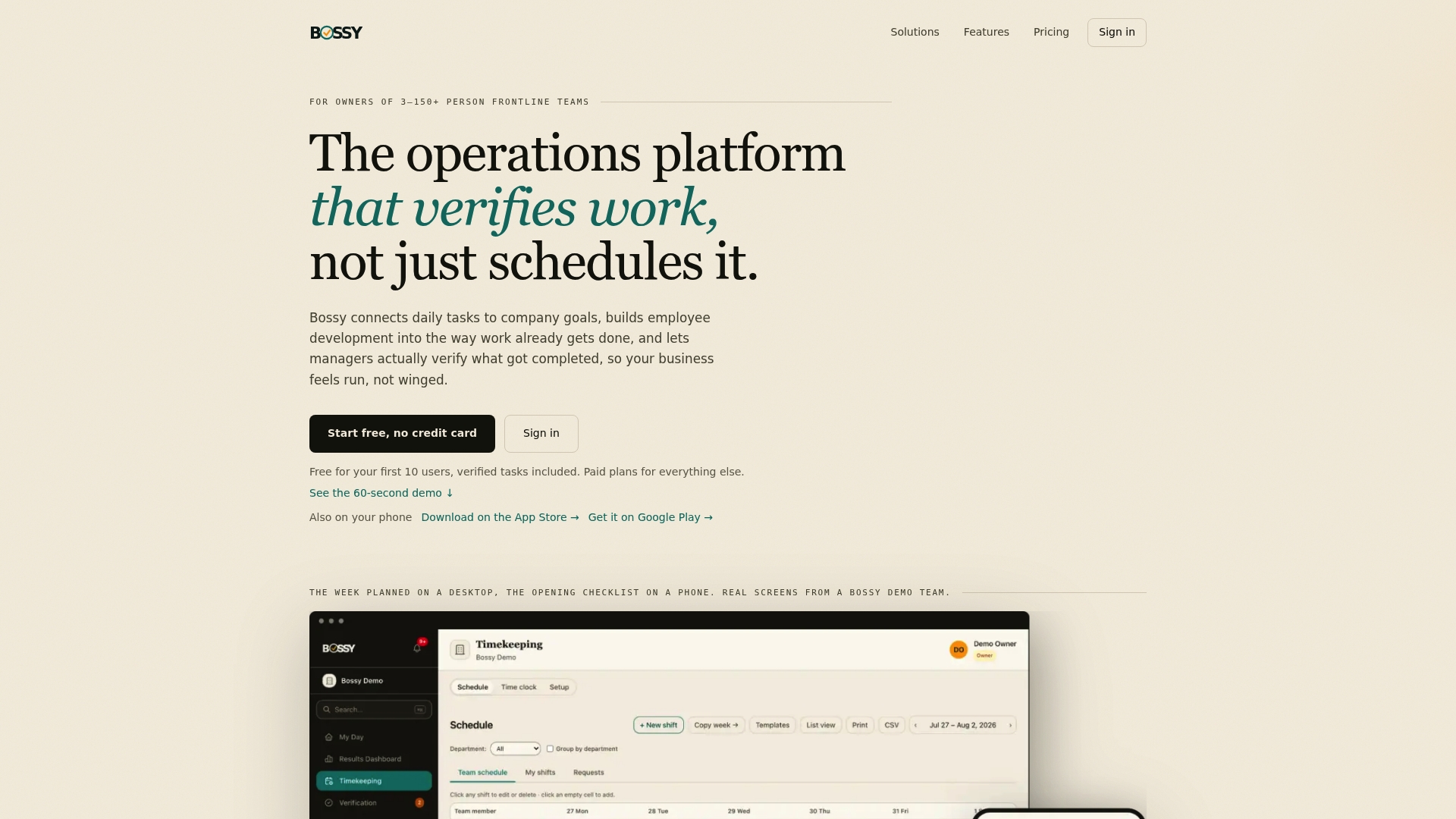
That combination matters most for kitchens juggling multiple shifts and managers who can't physically watch every station. Features such as calibration reminders and audit logs help create reliable records for inspection purposes. The restaurant-specific features cover the daily workflows in this checklist, from temperature logs to receiving checks.
If you're currently running checklists on paper or in a shared spreadsheet, start with a template built for opening and closing routines and see what changes when tasks come with photo verification attached. The Operations plan runs $30 per month and adds recurring checklists and approval queues to daily service.
Sources
Print these alongside your own checklist for daily reference and cross-check against your local health code, since city and county rules can be stricter than federal minimums.
- Food Safety Checklist (Orange County health/public document)
- Food Safety Evaluation Checklist (ServSafe)
- Sanitizing equipment and food-contact surfaces (University of Minnesota Extension)
FAQ
What Are the 5 C's of Food Safety?
Definitions vary by program, but a common version covers Cleaning, Cooking, Chilling, Cross-contamination prevention, and Checking (temperatures and dates). Treat it as a memory aid rather than a formal regulatory standard.
What Are the 5 Basic Food Safety Rules?
The core rules are: cook to proper internal temperatures, keep hot food hot and cold food cold, prevent cross-contamination, wash hands correctly, and store food off the floor with proper date marking. Every item on a daily food safety checklist traces back to one of these five.
What Are 10 Kitchen Safety Rules Managers Should Enforce?
A practical ten-item list covers handwashing, glove use, thermometer calibration, hot and cold holding temperatures, proper cooling times, date marking, FIFO rotation, sanitizer concentration checks, pest control verification, and documented corrective actions signed by a manager. Each rule maps directly to a section of this checklist.
How Long Should I Keep Food Safety Logs?
Retention requirements vary by jurisdiction, but many health departments expect logs kept for 90 days to a year. Check your local health code for the exact requirement, since city and county rules sometimes exceed federal guidance.
Does Bossy Replace a Paper Food Safety Checklist?
Bossy replaces the paper process with recurring digital checklists, photo proof, and manager approval queues that create an audit-ready record automatically. The Operations plan, at $30 per month, includes recurring checklists and photo verification.